
01 · The person behind the work
Follow a shape to its edge
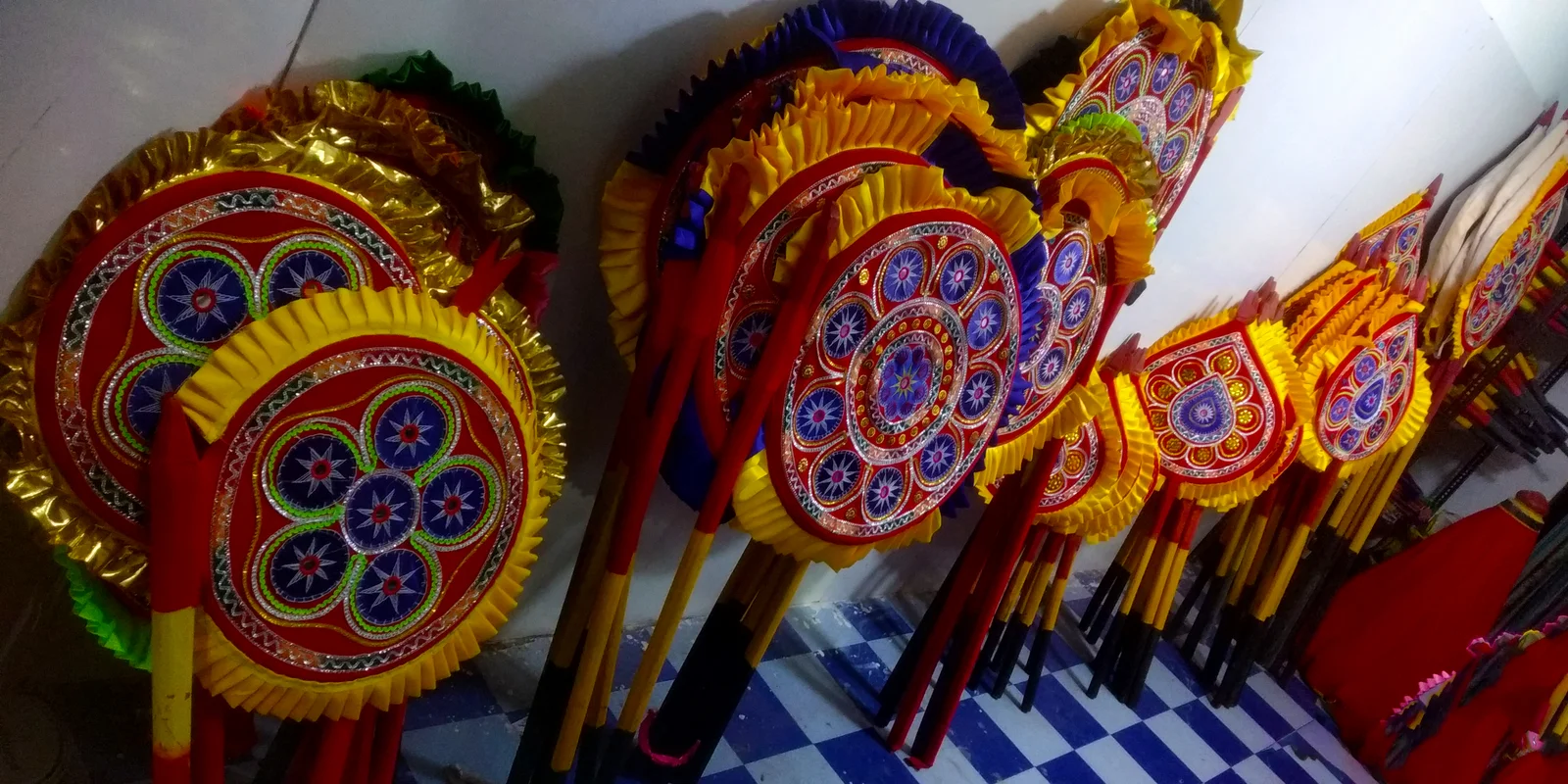
Start with one circle in the photograph. Follow its outline, then look for the smaller shapes inside it. The pleasure is in discovering that the pattern is built from pieces.
The NID account hosted by D’source describes coloured fabric being cut into shapes and stitched into appliqué cloth. It also documents decorative stitching and added embellishments.
02 · The person behind the work
Cut, place, stitch
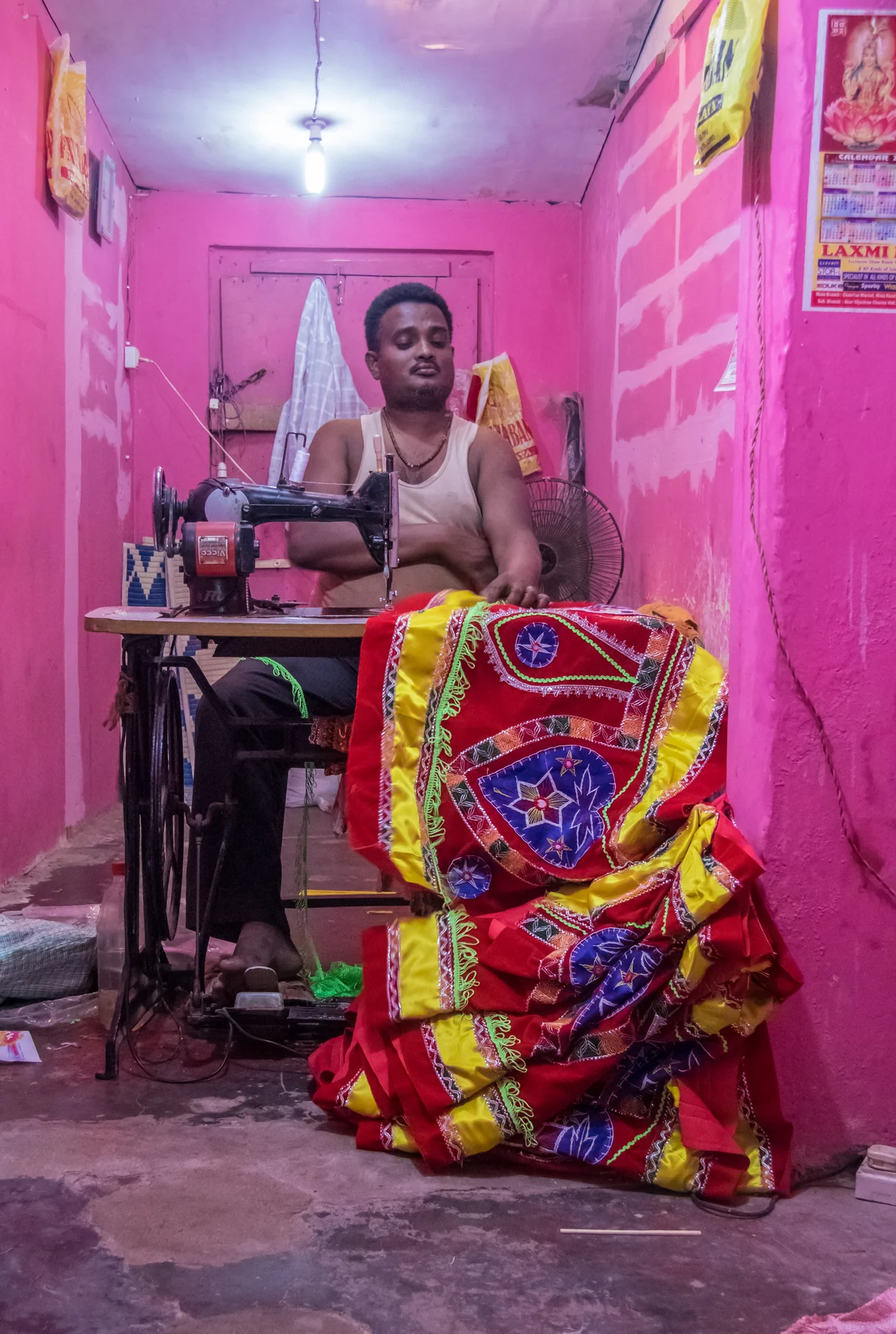
In the documented lampshade process, a stencil helps repeat the shape; cut pieces are organised before stitching. The account includes machine stitching as well as needlework.
Notice the sewing machine in Andrew Moore’s photograph. “Made by hand” here means attending to the maker’s work and decisions; it is not a promise that every stitch is hand-sewn. Ask which stages the person does and which tools they use.
03 · The person behind the work
From celebration to everyday objects
Odisha Tourism connects Pipili appliqué with the decoration of Jagannath’s chariots during Ratha Yatra. It also lists wall hangings, lanterns, umbrellas, bags and bedspreads among the forms visitors may encounter.
A ritual canopy and a bag can lead to different conversations. Ask what this object was made for, where its pattern came from and whether the maker gives it a particular name. The photograph alone cannot identify a ceremonial use.
04 · The person behind the work
A visit begins with a greeting
A shop display may be open to view while a workspace is busy. Ask whether the maker has time to speak. Agree the time and any fee before a demonstration; ask separately before photographing a person, an object or a workspace.
Confirm an exact meeting point, opening arrangements, steps, seating and toilets with your chosen host. No workshop appointment, demonstration or access inspection has been arranged by Utkal.
05 · The person behind the work
Take home the maker’s story
If you buy directly, ask who made the piece and which parts they worked on. Look at the edges together; ask about the fabric, lining, care and packing. A photograph cannot certify fibre, workmanship or durability.
Keep the maker’s preferred credit and a receipt. Agree the size, design, price and delivery terms before commissioning work. Ask separately about permission to share images of the work. A smaller piece with a story you understand can be a more lasting memory than a hurried purchase.
Sources, photographs & editorial notes
Research checked 2026-10-01. Documentary photographs and attributed process accounts; no named workshop, current appointment, price or material certification verified. Odia names and craft terminology await local review.
- NID / D’source · Traditional Applique Work — Making Process
Craft-process paragraphs attributed to Prof. Bibhudutta Baral, Divyadarshan C. S. and Manasa K H (NID Bengaluru), inspected 1 October 2026. Includes cutting, stitching and machine-stitched lampshades; no present market figures or universal technique inferred.
- Odisha Tourism · Pipili
About section rechecked 1 October 2026 for chariot decoration and object types. Historical origin, community proportions, film claims and general opening hours are not adopted as independently verified facts.
Pipili appliqué photographed in 2022. The image records a display, not current stock or a named maker’s catalogue. · Rahul Mukherjee · CC BY-SA 4.0. Resized and converted to WebP. No generated elements; derivative retains the stated share-alike licence.

A Pipili craftsperson at a sewing machine, photographed in 2016. The source does not name the maker. · Andrew Moore · CC BY-SA 2.0. Resized and converted to WebP. No generated elements; derivative retains the stated share-alike licence.
.jpg)
Utkal Project knowledge base. Founder & Editor-in-Chief: Ahimanikya Satapathy. Prepared with AI assistance; human editorial review pending.