
Choose a voice
One landscape.
Many ways to tell it.
Begin with a language you know—or one you have never heard. Each path brings together a place, a publication and an invitation to learn from its speakers.
Manuscripts · poetry · literary lives
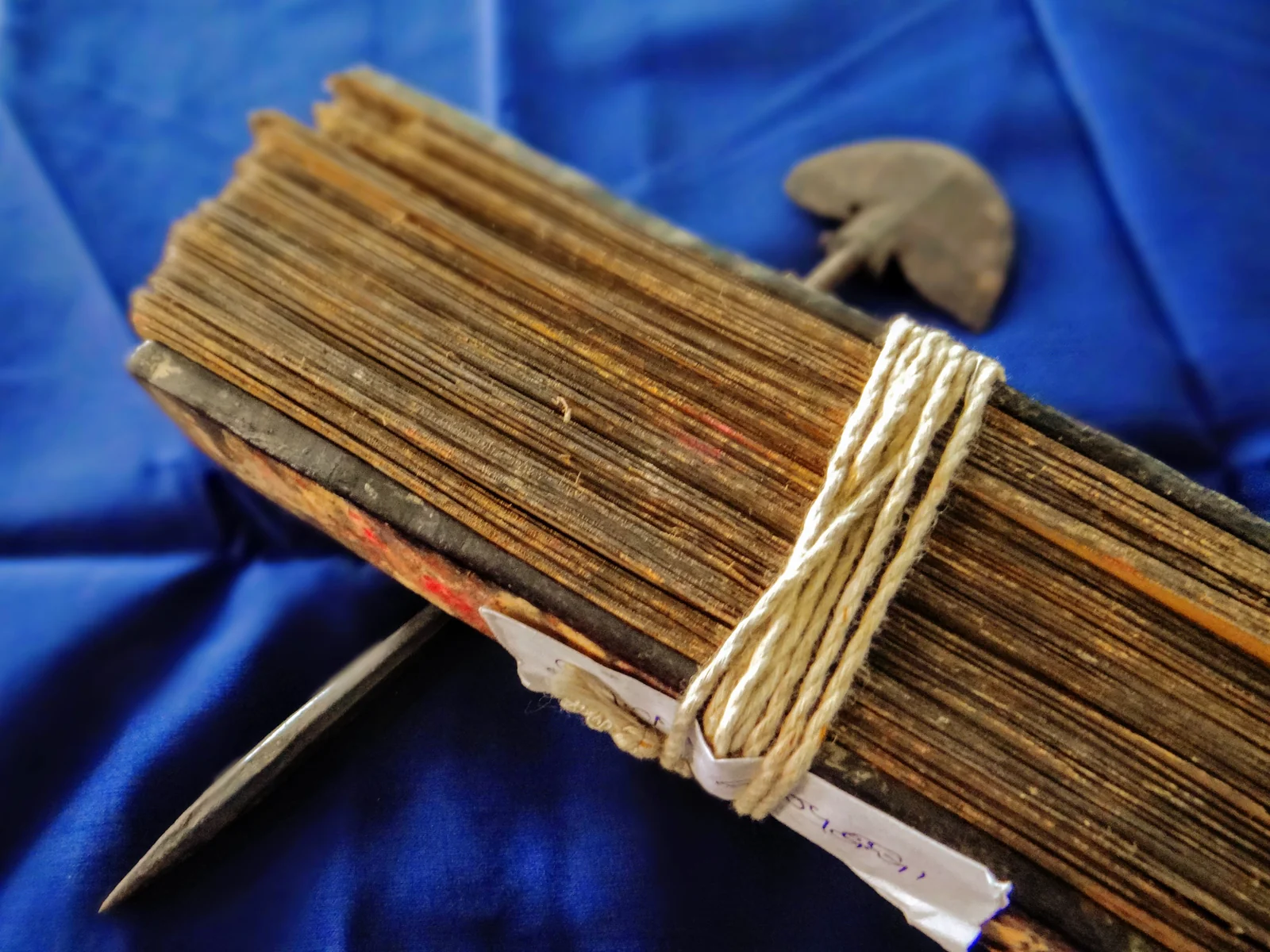
Odia · ଓଡ଼ିଆ →
From a palm-leaf page to a world of poetry and stories.
Ol Chiki · literature · Mayurbhanj
Santali →
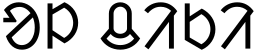
A script takes shape. Writers keep it moving.
The image spells the script’s name, Ol Chiki.
Western Odisha · song · a language of belonging
Sambalpuri →
A song can reach you before a map does. Begin with its makers, then listen for the world around it.
Learning · theatre · voices carried forward
Desia →
A language belongs on a stage and in a child’s first book. Follow two documented moments in Desia’s continuing story.
These are first introductions. A language’s reach extends beyond any one district; the places here are reading connections, not boundaries.
01 · A living language
More than one way to belong
SCSTRTI’s learning catalogue includes Santali, Kui, Kuvi, Saora, Ho, Juang, Koya and other language-labelled resources. It offers a practical starting point for exploring Odisha’s linguistic diversity.
Here, each language will have room for its own stories, literature and everyday life. Odia is our primary focus; it is not the only voice in the collection.
02 · A living language
Listen before you name
A language, a script and a community are connected, but they are not interchangeable. We will preserve speakers’ names for their languages and explain differing classifications with sources. Regional voices such as Sambalpuri/Kosali and Desia are part of the research programme.
Have a family expression, a song title or a learning resource to share? Start with who uses it, where, and what it means to them.
The numbers behind the voices
Where languages were counted
Explore the Census 2011 mother-tongue counts across Odisha’s 30 districts. Compare rural and urban communities, and see how individual entries sit within the Census classifications.
Open the language population atlas →The collection will grow
More voices to explore
- Gondi
- Kisan
- Sadri
Further profiles are being researched. Naming, local usage and classification will be documented with speakers and sources. This collection is not a complete inventory.
Browse SCSTRTI’s learning resources ↗Follow your curiosity
One voice.
Another doorway.
Sources, image credits & editorial notes
Prepared for Utkal Project, founded and edited by Ahimanikya Satapathy. Research checked 2026-10-01. Eight first introductions; this selection is not a language census. Seven new English profiles await Founder review. Fluent-speaker review of original text, translations and recordings remains pending.. Opening lines and reading prompts are original editorial invitations.
Reading and evidence
- SCSTRTI · Trilingual booklets
Catalogue and language-labelled titles inspected; individual booklets have not been reviewed in full.
Used in: More than one way to belong; More voices to explore. - SCSTRTI · Santali trilingual learning booklet (2018)
Original PDF inspected: publication credits on PDF page 3 and comparison table on PDF page 10. Selected pages only; vocabulary and pronunciation have not received fluent-speaker review. Linked for reading; pages and illustrations are not reproduced.
Used in: Santali. - SCSTRTI · Kui trilingual learning booklet (2018)
Original PDF inspected: publication credits on PDF page 3 and comparison table on PDF page 10. Selected pages only; vocabulary and pronunciation have not received fluent-speaker review. Linked for reading; pages and illustrations are not reproduced.
Used in: Kui. - SCSTRTI · Kuvi trilingual learning booklet (2018)
Original PDF inspected: publication credits on PDF page 3 and comparison table on PDF page 10. Selected pages only; vocabulary and pronunciation have not received fluent-speaker review. Linked for reading; pages and illustrations are not reproduced.
Used in: Kuvi. - SCSTRTI · Saora / Sora trilingual learning booklet (2018)
Original PDF inspected: publication credits on PDF page 3 and comparison table on PDF page 10. Selected pages only; vocabulary and pronunciation have not received fluent-speaker review. Linked for reading; pages and illustrations are not reproduced.
Used in: Saora / Sora. - SCSTRTI · Ho trilingual learning booklet (2018)
Original PDF inspected: publication credits on PDF page 3 and comparison table on PDF page 10. Selected pages only; vocabulary and pronunciation have not received fluent-speaker review. Linked for reading; pages and illustrations are not reproduced.
Used in: Ho. - SCSTRTI · Juang trilingual learning booklet (2018)
Original PDF inspected: publication credits on PDF page 3 and comparison table on PDF page 10. Selected pages only; vocabulary and pronunciation have not received fluent-speaker review. Linked for reading; pages and illustrations are not reproduced.
Used in: Juang. - SCSTRTI · Koya trilingual learning booklet (2018)
Original PDF inspected: publication credits on PDF page 3 and comparison table on PDF page 10. Selected pages only; vocabulary and pronunciation have not received fluent-speaker review. Linked for reading; pages and illustrations are not reproduced.
Used in: Koya.
Images and reuse
- An Odia manuscript and lekhani, photographed at Gyana Mandira library, Koraput.
Prateek Pattanaik · CC BY-SA 4.0. Full-frame resize and WebP compression for delivery; original retained. No generated or removed elements. Displayed adaptations retain the source licence.
- “Ol Chiki” in the script itself. A script sample, not a translation of “Santali”.
SlowPhoton · CC0 1.0. Original SVG retained, displayed at responsive size.


Research and presentation prepared with AI assistance. No speaker recording or complete literary text is reproduced. Help improve the collection.
Editorial preview · awaiting Founder and language or literary review.