
01 · The story in the thread
A pattern with a memory
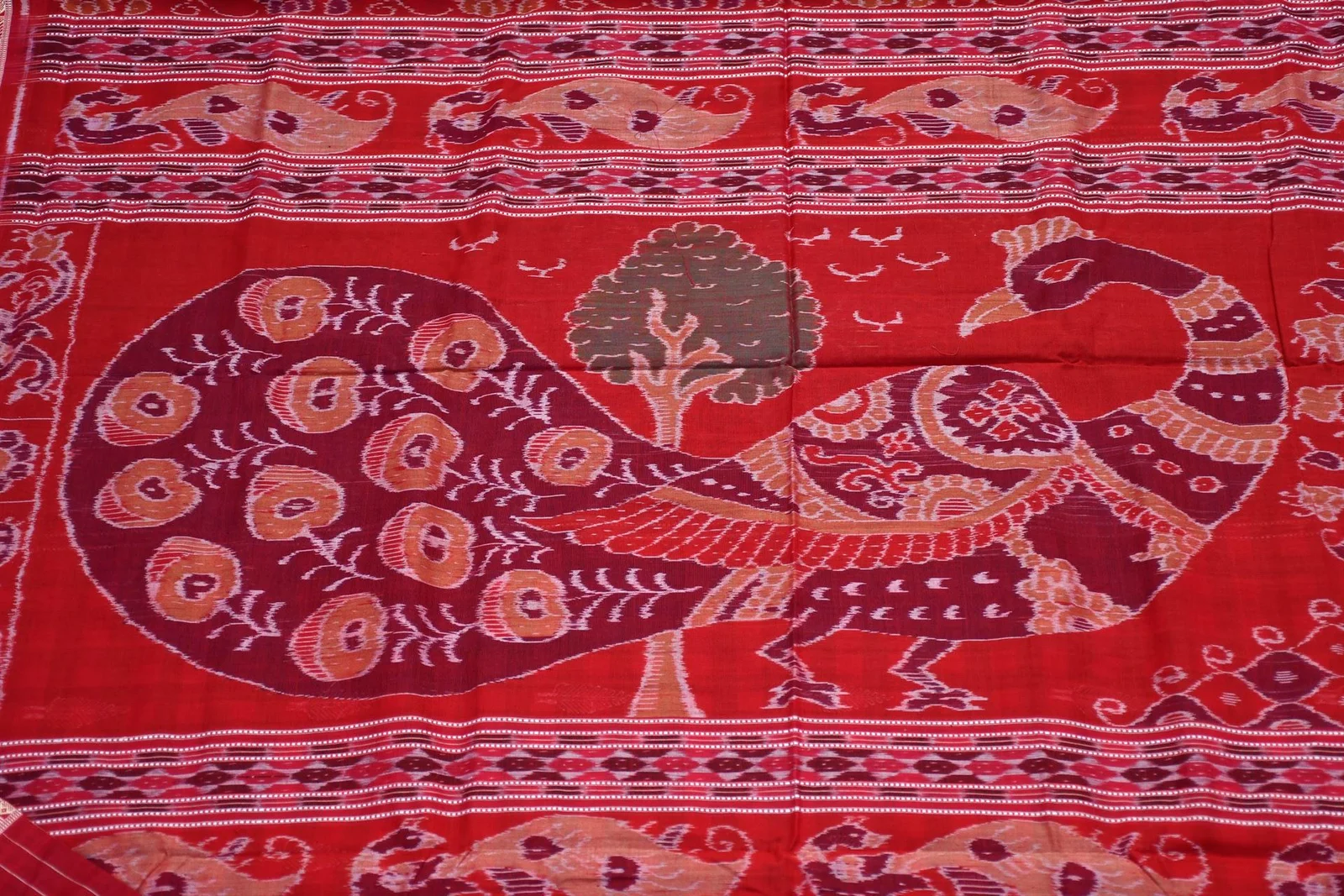
Start with the peacocks in this photograph. Follow a curve until its edge breaks into tiny steps. Then imagine the work of planning where colour should appear as separate threads come together. This is a way of looking, not a test of authenticity.
02 · The story in the thread
The colour arrives before the cloth
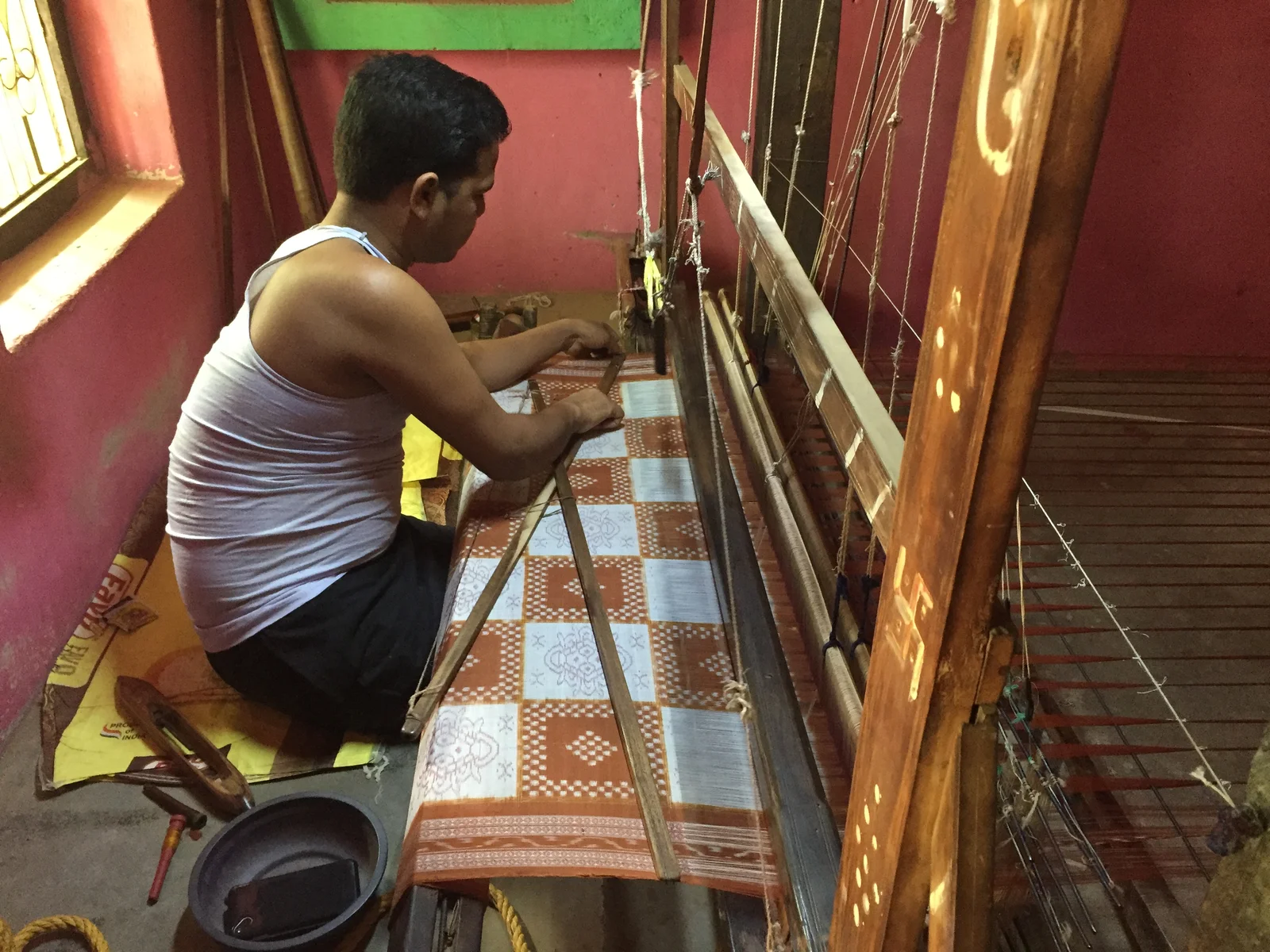
NID’s Sambalpur documentation describes Bandha as a tie-and-dye technique applied to yarn. Selected lengths are tied to resist colour; tying and dyeing can be repeated to build the design. The prepared yarn is then woven into cloth.
The account describes cotton and commercially supplied synthetic dyes in the process it recorded. Bandha names a technique, not a promise that every cloth uses natural dyes or the same fibre.
03 · The story in the thread
Follow the thread towards Bargarh
Odisha’s handloom department lists Bargarh for cotton tie-dye, silk and home-furnishing textiles. It is a useful starting point for understanding a production landscape rather than treating Sambalpuri as the name of a single shop.
If a weaver welcomes you, ask to see prepared yarn beside the work on the loom. Which part was planned first? Who did the tying and dyeing? How does the weaver keep the pattern meeting itself? Leave time for the answer.
04 · The story in the thread
A cloth, and the names behind it
Ask who tied, dyed and wove this piece, where the work happened, and how the maker would like to be credited. Arrange a visit and any demonstration fee before travelling; ask before photographing people, homes or designs.
Ask about fibre, yarn, dyes and any finishing. Request evidence for a certification claim and keep the maker or seller’s details with the receipt. A photograph, a place name or the word natural cannot certify a particular product.
Ask for care instructions specific to this piece: washing or cleaning, drying, storage and whether colours may transfer. Agree the price, measurements, lead time, delivery and return terms before ordering.
Sources, photographs & editorial notes
Research checked 2026-10-01. Photographs document the subjects and dates in their captions; they do not establish current workshop access. Process descriptions are attributed to their sources. No named workshop, current appointment, price or material certification has been verified. Odia names and craft terminology await local review.
- Saree Weaving — Sambalpur: making process · NID / Dsource
Attributed NID process description inspected 1 October 2026. Describes a documented cotton and synthetic-dye process, not every Sambalpuri textile. Unrelated spam navigation ignored.
- Important Handloom Centers · Government of Odisha
Department list identifies Bargarh tie-dye production and Nuapatna silk Khandua and calligraphy textiles. No current workshop access verified.
A Sambalpuri sari pallu with peacock motifs · photograph by Rahul191313. · Rahul191313 · CC BY-SA 4.0. Resized and converted to WebP; full frame retained. Derivative available under CC BY-SA 4.0.

Sambalpuri sari weaving · the image record does not identify the weaver. · Saileshpat · CC BY-SA 4.0. Resized and converted to WebP; full frame retained. Derivative available under CC BY-SA 4.0.

Utkal Project knowledge base. Founder & Editor-in-Chief: Ahimanikya Satapathy. Prepared with AI assistance under the Founder’s editorial direction. Specialist language and maker review remain open.