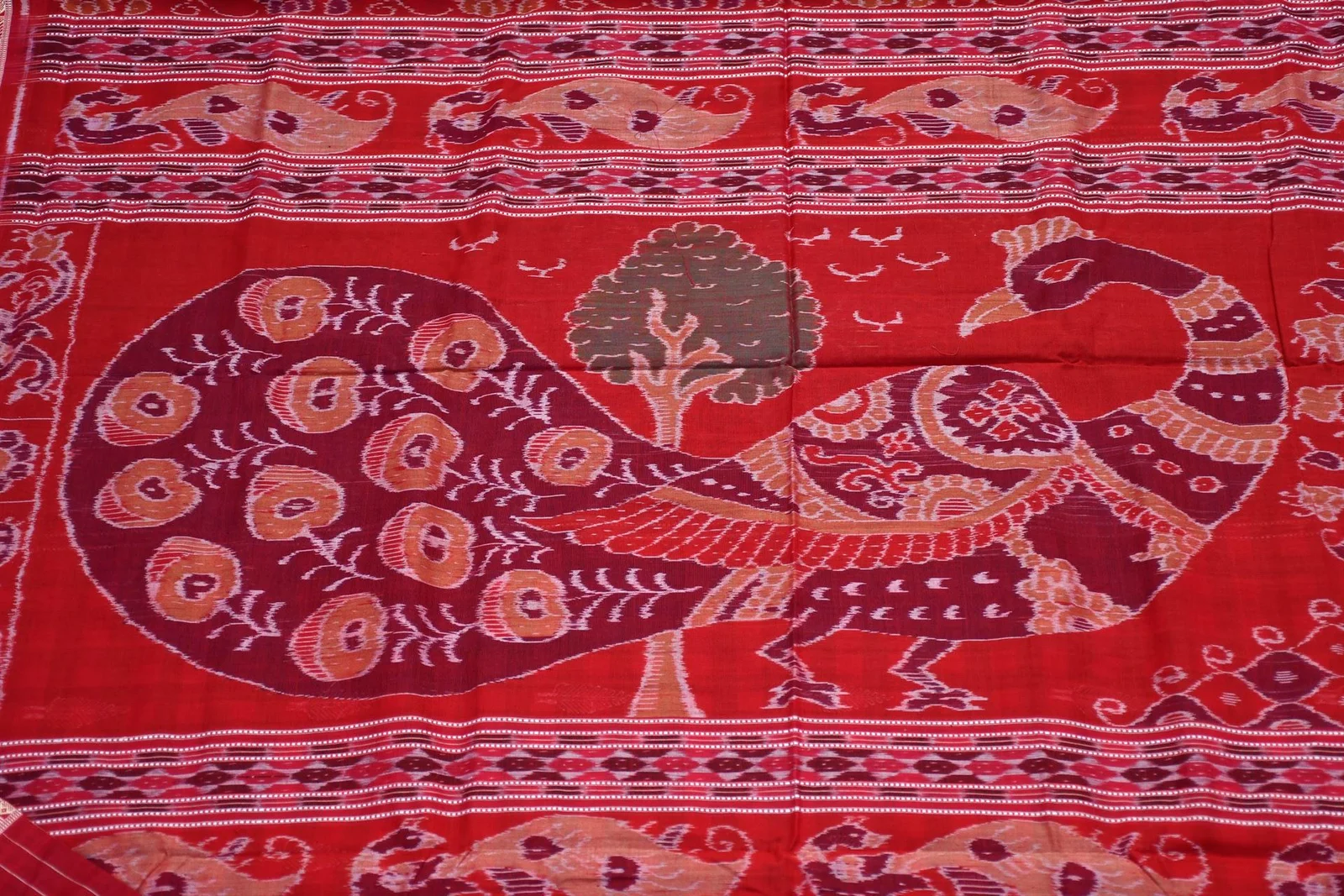
01 · A closer look
Sambalpuri Bandha · before the cloth →
A peacock opens its tail across the cloth. Follow the pattern backwards, and you arrive at a bundle of yarn—and the decisions made before weaving began.

Cloth, place & the person behind the work
A pattern planned in yarn. A poem woven into silk. A colour drawn from roots. Follow Odisha’s textile stories into the materials, places and people behind the cloth.
A detail worth noticing. A person worth listening to.
Begin the story ↓Cloth is a good reason to slow down. Begin with something that catches your eye, learn how it came into being, and carry a better question to the person who made it. These stories open different doors into Odisha’s weaving traditions.
Thread, colour and words
01 · A closer look
A peacock opens its tail across the cloth. Follow the pattern backwards, and you arrive at a bundle of yarn—and the decisions made before weaving began.
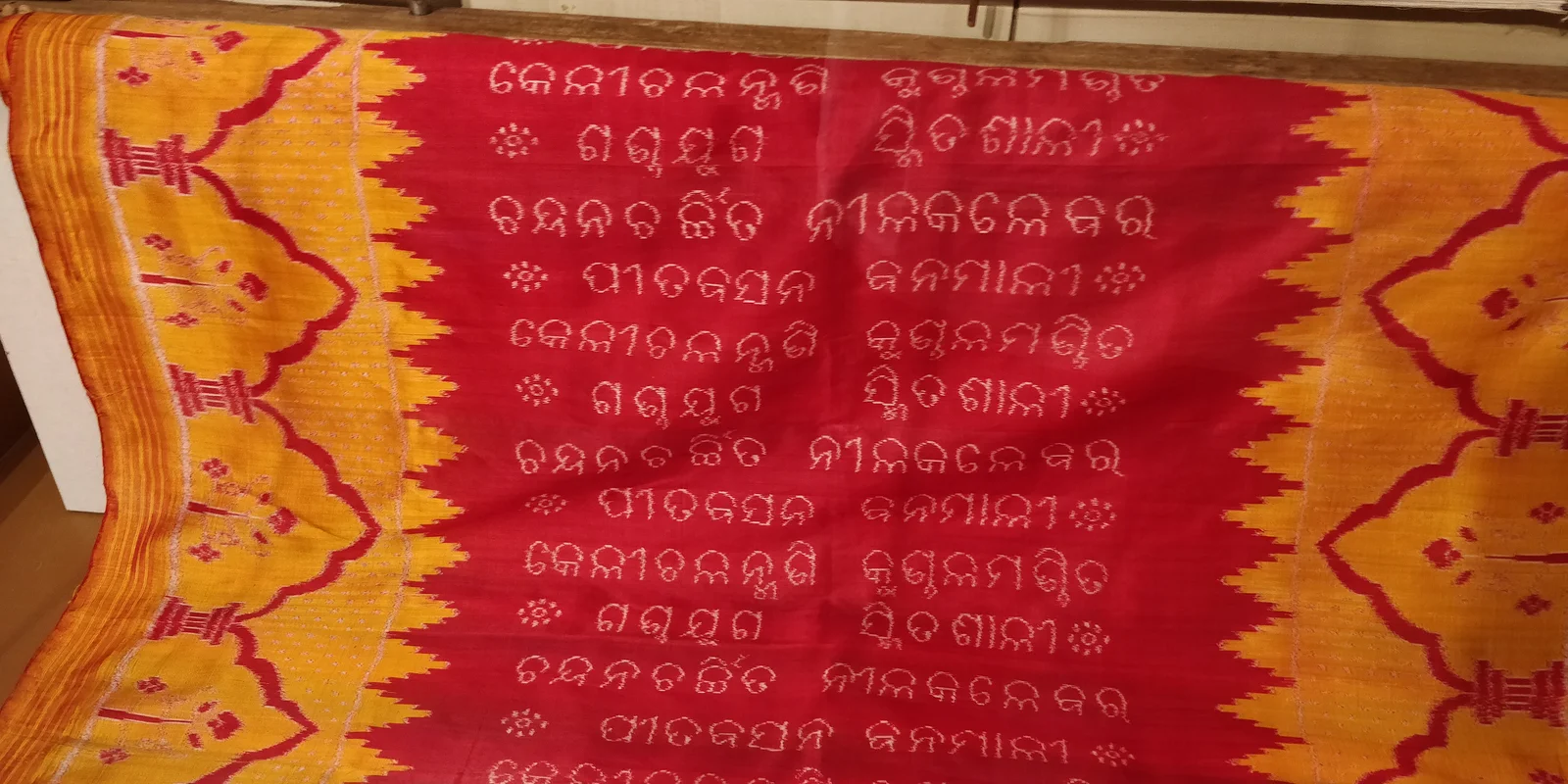
02 · A closer look
A page can be made of thread. In this Khandua, lettering moves across red cloth—an invitation to meet poetry, devotion and the people who weave them together.
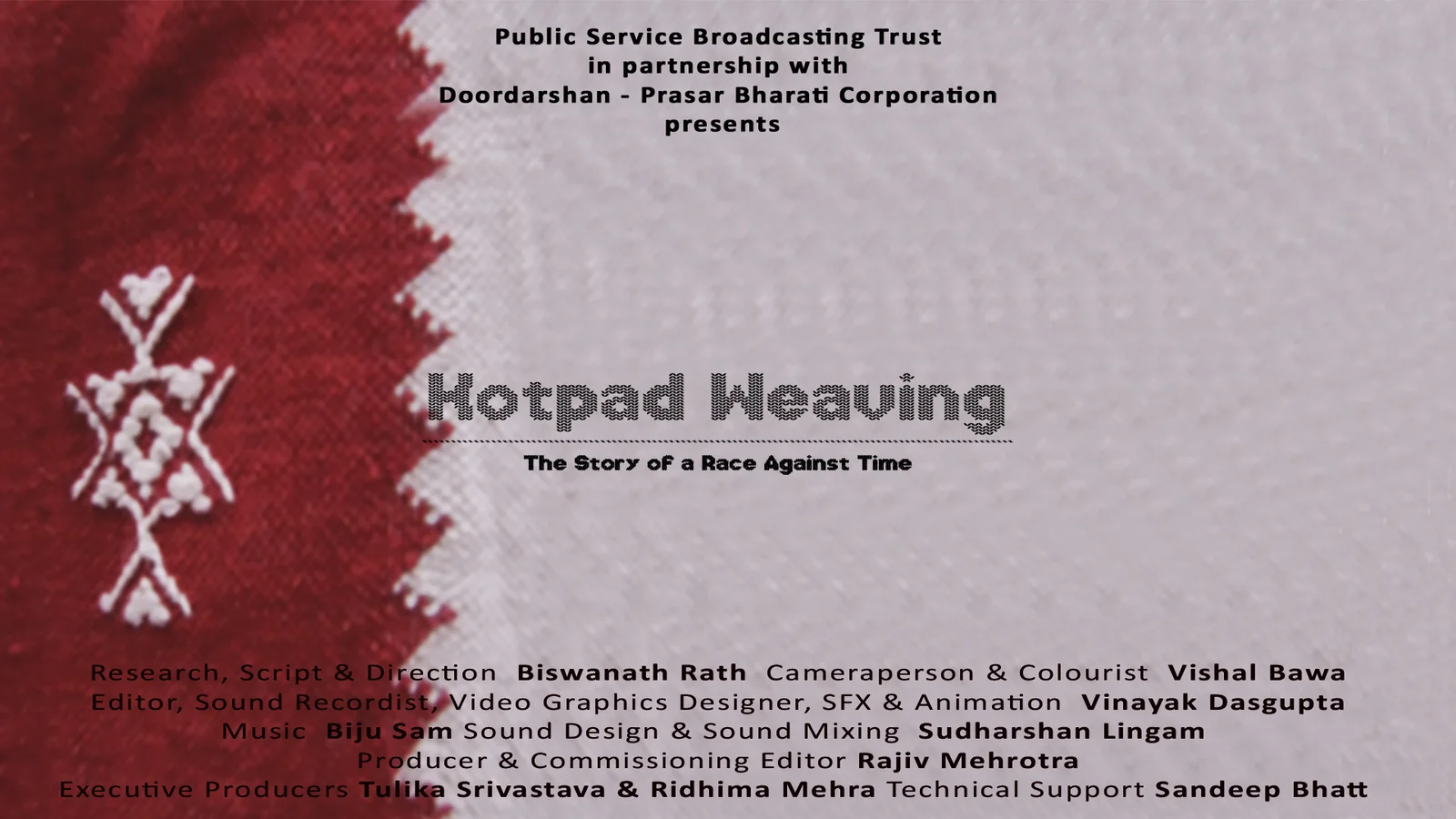
03 · A closer look
Before a colour reaches the loom, there is another story to tell. In Kotpad, following the red leads towards roots, dyeing knowledge and the people who keep it alive.
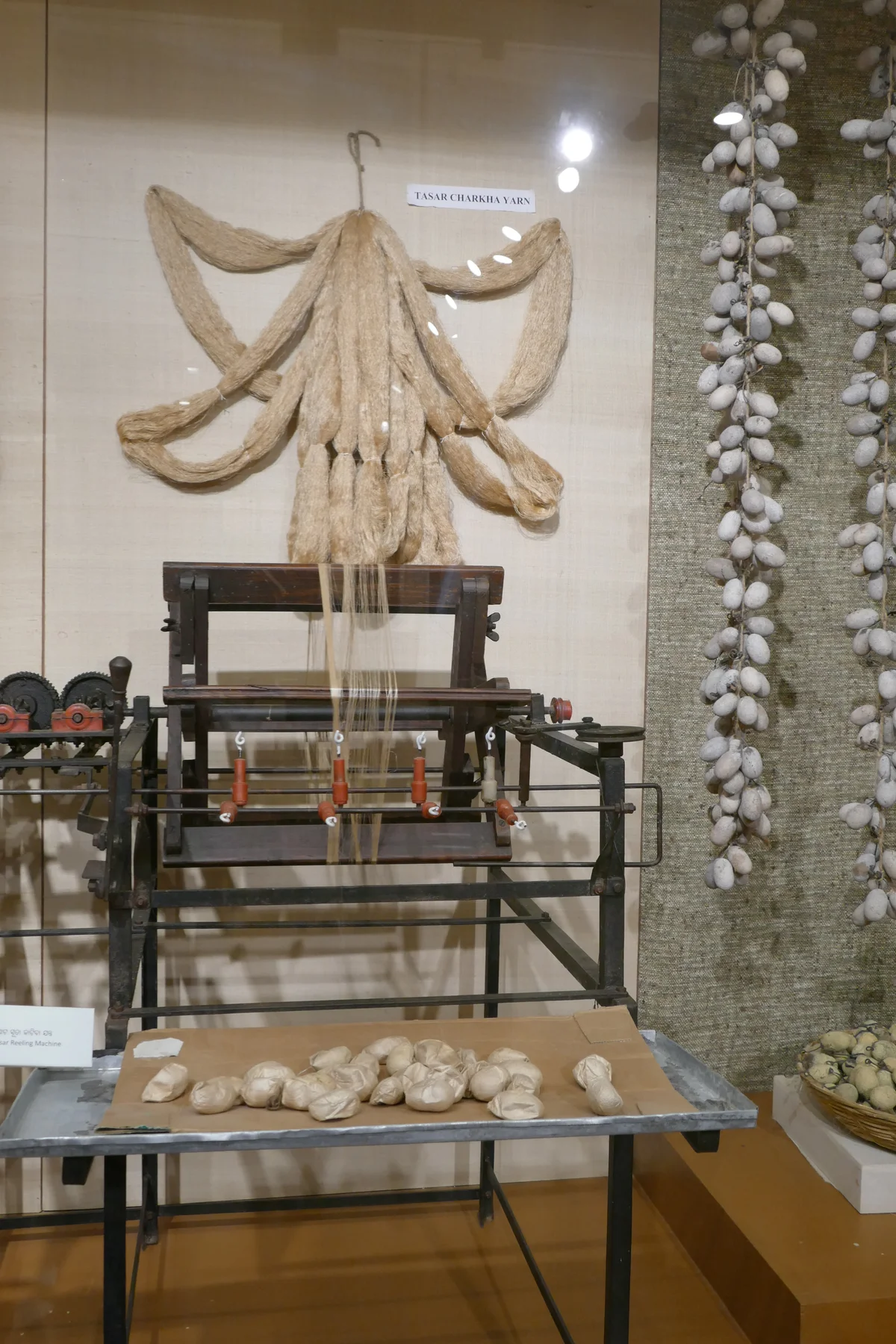
04 · A closer look
Before the border and the drape, there is a cocoon. Follow Tasar from branch to yarn, then towards the places and people who give the silk its next life.
A conversation to carry
Ask who tied, dyed and wove this piece, where the work happened, and how the maker would like to be credited. Arrange a visit and any demonstration fee before travelling; ask before photographing people, homes or designs.
Ask about fibre, yarn, dyes and any finishing. Request evidence for a certification claim and keep the maker or seller’s details with the receipt. A photograph, a place name or the word natural cannot certify a particular product.
Ask for care instructions specific to this piece: washing or cleaning, drying, storage and whether colours may transfer. Agree the price, measurements, lead time, delivery and return terms before ordering.
Turn curiosity into a plan
Save the stories that catch your eye, with your own material, care and visit questions. These weaving places lie in different parts of Odisha: choose a region first and arrange any visit directly.
A selected introduction, not a complete survey. Workshop access, current sellers, stock, prices and certifications have not been verified. The textile starter spans different regions and is not a checked day route. Research checked 2026-10-01. Prepared with AI assistance under the Founder’s editorial direction. Specialist Odia and maker review remain open. Founder & Editor-in-Chief: Ahimanikya Satapathy.
A Sambalpuri sari pallu with peacock motifs · photograph by Rahul191313. · Rahul191313 · CC BY-SA 4.0. Resized and converted to WebP; full frame retained. Derivative available under CC BY-SA 4.0.
Gita Govinda Khandua · photographed in 2018; identified by the photographer. · Prateek Pattanaik · CC BY-SA 4.0. Resized and converted to WebP; full frame retained. Derivative available under CC BY-SA 4.0.
Release poster for Kotpad Weaving (2018), directed by Biswanath Rath · not a workshop photograph. · Seven5carrom · CC BY-SA 4.0. Resized and converted to WebP; full frame retained. Derivative available under CC BY-SA 4.0.
Tasar yarn and reeling equipment · Odisha Crafts Museum, 29 October 2018. Museum display, not a working workshop. · Kritzolina · CC BY-SA 4.0. Orientation corrected, resized and converted to WebP; full frame retained. Derivative available under CC BY-SA 4.0.
We use optional cookies to understand how our website is used and improve your experience. You can change your choice at any time.


